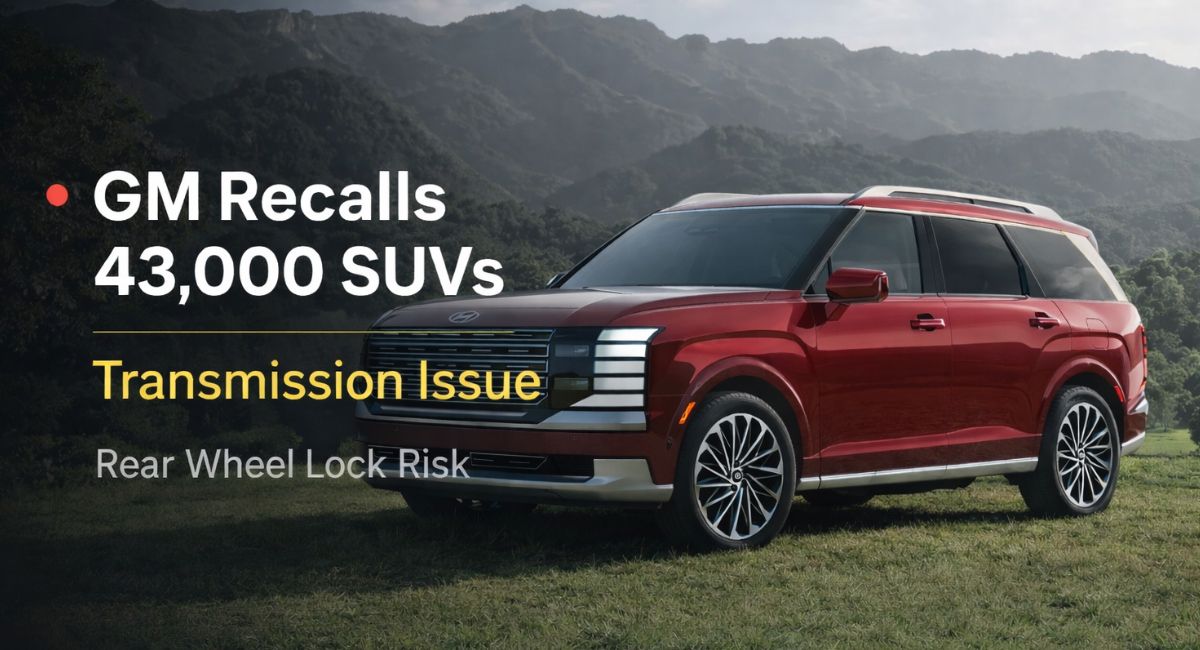
The automotive industry rarely uses the word “lock” lightly — especially when it involves wheels at highway speeds. Yet that is exactly the concern prompting a major action: GM Recalls 43,000 SUVs over a transmission defect that may cause the rear wheels to lock under certain conditions.
At first glance, this may sound like a routine recall. In reality, it touches one of the most critical mechanical systems in modern SUVs: the drivetrain. When torque delivery is compromised, vehicle stability can be affected in seconds.
As someone who closely follows vehicle safety trends, drivetrain engineering, and manufacturer response strategies, I’ve analyzed what this recall means technically, practically, and from an ownership standpoint. Below is a comprehensive, experience-driven breakdown.
The Core Issue: What’s Actually Happening?
The recall centers around a transmission component that may fail internally. If that failure occurs while the vehicle is moving, it can interfere with proper gear engagement and torque transfer to the rear wheels.
In specific circumstances, the malfunction may cause:
- Sudden deceleration
- Rear wheel lock or momentary seizing
- Stability control intervention
- Illumination of warning indicators
Rear wheel lock is especially concerning in rear-wheel-drive and all-wheel-drive SUVs, where torque routing plays a major role in vehicle balance.
Why Transmission Failures Are Taken Seriously?
Modern automatic transmissions are incredibly sophisticated systems. They combine:
- Multiple planetary gear sets
- Precision-machined clutch packs
- Electronic shift solenoids
- Torque converters
- Dedicated transmission control modules (TCM)
When even one internal component experiences abnormal wear or fracture, the entire torque flow sequence can be disrupted.
Unlike minor software glitches, mechanical drivetrain issues require direct hardware correction.
Affected SUV Platforms
The recall affects approximately 43,000 SUVs produced within a defined manufacturing period. These vehicles share similar transmission assemblies and drivetrain configurations.
While exact trims vary, the impacted vehicles typically include:
- Mid-size and full-size SUVs
- Rear-wheel drive (RWD) variants
- All-wheel drive (AWD) configurations
- Models equipped with advanced multi-speed automatic transmissions
Owners are advised to verify their Vehicle Identification Number (VIN) through authorized dealerships.
Vehicle Specifications Overview
To understand the mechanical load placed on these transmissions, it’s important to review typical specs of affected models.
Engine Options
- 2.7L Turbocharged Inline-4
- 3.6L Naturally Aspirated V6
- 5.3L V8 (select trims)
Horsepower Range
- Approximately 310 hp to 420 hp
Torque Output
- 348 lb-ft to 460 lb-ft
Transmission Types
- 8-speed automatic transmission
- 10-speed automatic transmission (depending on configuration)
Drivetrain
- Rear-Wheel Drive
- Intelligent All-Wheel Drive
Towing Capacity
- Up to 8,400 pounds when properly equipped
High torque output combined with heavy vehicle weight increases drivetrain stress — making transmission durability absolutely critical.
How Rear Wheel Lock Can Occur?
In technical terms, rear wheel lock may happen if internal transmission components seize or improperly engage under load.
Possible contributing factors include:
- Component fracture
- Gearset seizure
- Internal clutch pack malfunction
- Torque converter disruption
If torque flow is interrupted suddenly, rotational momentum can be affected. In extreme cases, this may momentarily restrict rear wheel movement.
Even brief lock events at highway speeds can increase the risk of skidding, particularly on wet or uneven surfaces.
Real-World Driving Impact
Drivers may notice early warning signs such as:
- Harsh shifting
- Unexpected downshifts
- Unusual drivetrain noises
- Temporary power interruption
- Warning lights on the instrument cluster
It’s important to note that not all affected vehicles will experience symptoms. The recall is precautionary — aimed at preventing future risk.
Manufacturer Response and Repair Plan
When GM Recalls 43,000 SUVs, the next step is operational execution across its dealer network.
The repair process may include:
- Diagnostic inspection of the transmission
- Internal component replacement if needed
- Transmission control module reprogramming (if applicable)
- Complete transmission replacement in severe cases
- Transmission fluid replacement
All recall-related repairs are covered at no cost to owners.
Dealers are equipped with service bulletins outlining detailed repair procedures.
Is It Safe to Continue Driving?
In most recall situations, vehicles remain operable unless explicitly classified as “Do Not Drive.”
Owners should:
- Monitor for abnormal transmission behavior
- Avoid aggressive acceleration
- Schedule recall service promptly
- Seek immediate inspection if warning lights appear
If symptoms worsen, the vehicle should not be driven until evaluated.
Engineering Perspective: Why This Can Happen?
No automaker is immune to component-level manufacturing variance. Even with rigorous quality control, mass production introduces complexity.
Modern transmissions are built to tight tolerances. A minor deviation in material strength, machining precision, or lubrication flow can lead to premature wear under stress.
The positive takeaway here is proactive detection. Issuing a recall before widespread incidents occur reflects responsible safety oversight.
Long-Term Ownership Considerations
Owners often worry about resale value and reliability perception after a recall.
From an industry standpoint:
- Properly repaired recall vehicles remain compliant
- Documented repairs can enhance transparency during resale
- Most resale values normalize once recall service is completed
Transmission replacement under recall can even extend long-term drivetrain longevity.
Industry-Wide Context
Transmission recalls are not isolated to one manufacturer. Over the past decade, several major brands have addressed drivetrain issues as vehicle complexity increases.
Advanced multi-speed transmissions improve:
- Fuel efficiency
- Performance
- Towing capability
However, increased mechanical complexity also introduces more components that must function flawlessly.
This recall highlights the balance between innovation and reliability in modern SUV engineering.
Owner Action Plan
If you own an affected vehicle:
- Confirm recall eligibility via VIN
- Schedule service with an authorized dealer
- Retain documentation of completed repairs
- Monitor vehicle performance after repair
- Maintain regular transmission service intervals
Proactive engagement ensures safety and peace of mind.
The headline GM Recalls 43,000 SUVs underscores how seriously automakers treat drivetrain integrity. While the recall may sound alarming, the broader perspective is reassuring: early detection, organized repair plans, and no-cost fixes for customers.
Transmission systems are among the most complex mechanical assemblies in any vehicle. Addressing even small risk patterns before they escalate reflects engineering accountability.
For owners, the message is straightforward: verify your vehicle, schedule the repair, and continue driving with confidence once the issue is resolved.
FAQs
Why did GM recall 43,000 SUVs?
The recall addresses a transmission defect that may cause the rear wheels to lock unexpectedly, posing a safety risk.
What models are included in the recall?
Select mid-size and full-size GM SUVs equipped with specific automatic transmissions produced within a defined timeframe are affected.
Is this a common transmission problem?
No widespread failure trend has been reported, but GM identified a potential defect pattern that warranted preventive action.
Will the transmission be fully replaced?
In some cases, yes. If inspection reveals severe internal damage, dealers may replace the entire transmission assembly.